The Basement 1971
A documentary art film.
A documentary art film.
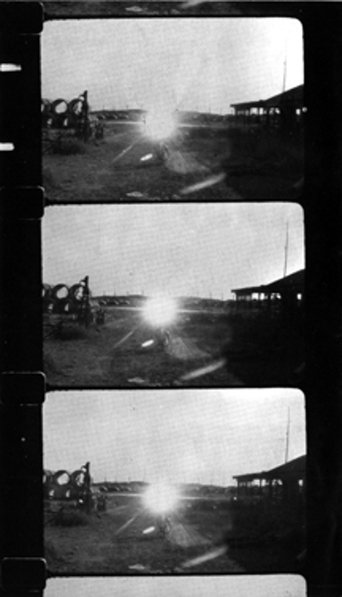
The camera slowly zooms, in over a long period of time, on the light of the sun reflected in the mirror of a bicycle parked at the construction site. To this is added a slowly evolving flicker effect derived from negative-positive reversals, progressively dismantling the distance from the subject. Nakai created a masking film with a calculated pattern of black and white frames into which he inserted positive and negative images and made a print out of two separate rolls of film. The original projection speed was 16 frames per second, but the sound is separate from the open-roll tape rather than burned in, so it can also be screened at 24fps. Also, the original sound consisted of the friction noise of rubbing steel, but in 2019 a new version of the sound was created featuring the friction noise of glass. Two versions of the film exist: 24:15 mins at 24 fps and 40 mins at 16 fps.

JEMINA, THE MOUTAIN GIRL is playing with various elements : literary sterotypes of the F.Scott Fitzgerald novel, inflamed romantism of a Viennese waltz, idealized feminine beauty through lengthy shots, some white and some black, burst of color, intrusion of rose, and green. The film is mocking classic hollywood cinema and undertake the fundamental discontinuity of every film, of every filmic text. Pleasure of the text, pleasure of cinema.

A delicate and arousing treatment of lovemaking. Its mode is simple and classical, combining technical mastery and personal restraint. The image is vivid subtle and ambiguous while the sound is sharp and clear. Barlett's film, in the judge's opinion, most closely approximated their idea of what is an erotic film should be – an imaginative, suggestive, artistic, non- clinical evocation of the sexual act. – Bruce Conner, Maurice Girodias, Arthur Knight: judges at the First Ever Erotic Film Festival 1970

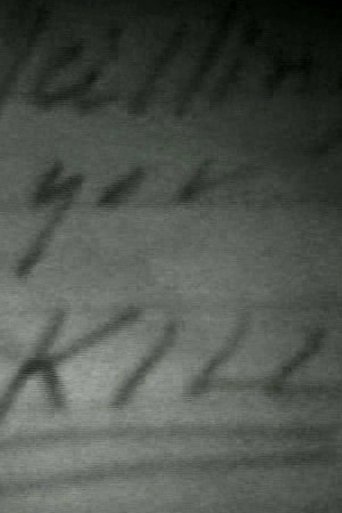
In 1970 Valerie Solanas was released from a mental institution, two years after shooting Andy Warhol. Still unstable, she moved into the Chelsea Hotel where she penned a death threat to Michel Auder and his wife Viva. Using a soundtrack by Wagner, Auder surveys the handwritten evidence of Solanas's threat, before reciting its threatening prose melodramatically.

A subjective film song of awareness; woman alone, woman with child, woman as scientist, woman as artist, woman with woman, woman with man. Paradox and dilemma, the human state as seen through today's suburban woman. The filmmaker explored with several women their conditions and sought ways of relating and structuring those states in a film.

A "poor" family who can no longer pay their rent. Together with other "poor people", they think about how poor people can help themselves. The only option they see is to rob a bank...

Surveys growing interest, especially among young people, in the occult, black and white magic, mysticism, and witchcraft. Interviews writer Colin Wilson, and shows a self-proclaimed New York Witch, a professor who claims that occultists are frauds and another who taught a course on witchcraft; also includes a high priestess of the New Jersey First Church of Satan.

After a general view of the city Ghent, its horizon and roofs, we are confronted with views of streets and houses in one particular district that is threatened with demolition. A poster announces protest actions against the demolition of the Patershol district.

Women's bodies are presented as ambiguous erotic landscapes, sometimes classically baroque, sometimes cubistic visions in a distorted reflection, depending on the camera angle and shot size. Finally the female flesh frees itself to the accompaniment of electronic smacking noises and, ignoring all gender borderlines, unites with itself in Cronenbergesque growths.

ACI Films takes you to the county fair.

The film tells about how on the Leningrad radio programs were created for children, about how the child perceives a fairy tale told on the radio. The film features the Honored Artist of the RSFSR, known to all Leningrad children Maria Petrova and People's Artist of the USSR Alexander Borisov.
The film is about freight handler's life.
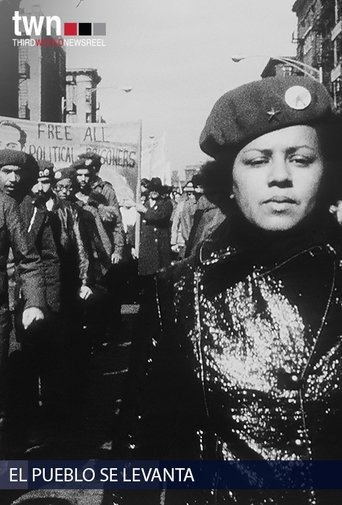
In the late '60s, conditions for Puerto Ricans in the US reached the boiling point. Faced with racial discrimination, deficient community services, and poor education and job opportunities, Puerto Rican communities began to address these injustices by using direct action. This film focuses on the community of East Harlem, capturing the compassion and militancy of the Young Lords as they implemented their own health, educational, and public assistance programs and fought back against social injustice. An excellent portrayal of inner city organizing in the late 60s.

A teenager's dreams collide with social expectations and gender-based stereotypes when she finds that, despite her parents' assurance that she can be ‘anything she wants to be’, reality presents another story. One of the first and most widely used consciousness-raising films of the growing Women’s Movement, this film helped give voice to a generation of women whose expectations, opportunities and career choices were extremely limited.
Film by Ray L. Birdwhistell produced by the Eastern Pennsylvania Psychiatric Institute
Children will delight in this introduction to primary colours and their combinations--an animated film in which little elf-like creatures make all the discoveries. They emerge from three circles painted red, yellow and blue. When they venture into a circle of another colour they find that they, too, change colour. Their every movement and posture is designed to convince and amuse.

"These are my past lives when my lovers were black and my lovers were white, when I was male and when I was female." A reincarnation.
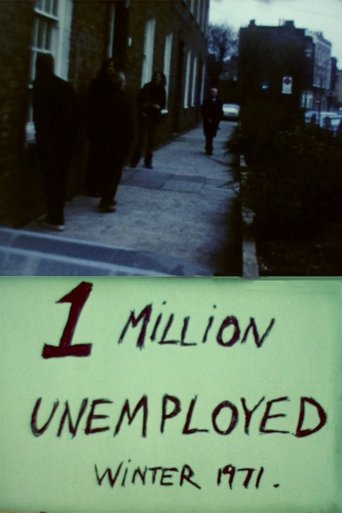
A film on unemployment that invites the spectator to resist capitalism and the consumption society, made by Mike Dunford, who was unemployed at the time, with the intention of providing a catalyst for discussion at Claimants Union meetings.

