Blue For You

Blue For You 1981

1

in Blue for You I experimented with Dov Eylath on various video techniques including chroma-key, also known as blue screen, to illustrate the psychological tension between two people. Chroma-key utilises two cameras – the one camera omits one colour from its spectre, the other then fills it in. Blue is the best colour-key. “Anne Bean covers up her face with a blue paint. Because the one camera doesn’t pick up blue, her features disappear bit by bit as she applies the colour. ‘Through’ her we see Eylath’s face appear, becoming ever more dominant. The dialogue is a complete agreement with this struggle between two identities.”
1981

Dispute Over a Pig

Dispute Over a Pig 1981

1

Meat evokes happiness hormones, but behind the gentle words “pork belly” or “neck” lies a meat factory where meat is divided, quartered, and cut up. With sharp candour, this critical morality play draws attention to the ecological, economic, and ethical implications of factory pig farming, and the striking contrast between the Czech culture of overeating, and starvation in Africa.

1981

Vampyr

Vampyr 1981

1

A man reading a copy of Bram Stoker’s ‘Dracula’ begins to hallucinate; at one point he crawls across the floor, with the camera angle suggesting the count scuttling down the walls of his castle, and another scene has the book itself flying in mid-air, its covers flapping like bat wings”.

1981

To idzie mlodosc

To idzie mlodosc 1981

1

A documentary etude presenting statements made by high school graduates in 1981 about their perception of socialism in the People's Republic of Poland. Young women and men express their dissatisfaction and fears about their own future in socialist Poland, whose fate, they claim, is subject to the vision of Moscow and party comrades at home.

1981

Calamity Jane - Letters to Her Daughter

Calamity Jane - Letters to Her Daughter 1981

1

This film is not exactly a documentary; it is a person reading the book while visiting the places where she lived, taking pictures of it in the early eighties. The letters to her daughter, whom she gave away to foster parents in Virginia after Wild Bill had been shot in the back in a saloon in Deadwood, show her in another light: as a woman who clearly understood social taboos of our society and, on one hand, she rejected what society dictated and, on the other, she longed for the bourgeois lifestyle. Many people argued that those were not real, since it was considered to be illiterate. The truth is, she was, and she tried to learn later in life just enough as to write a bare few words, and at times she also employed others in writing things for her.

1981

Hobo

Hobo 1981

1

Documentary on hobo culture in the United States at the turn of the 1980s.

1981

Axe

Axe 1981

1

Story of an axe against nature

1981

Day Like a Dandelion

Day Like a Dandelion 1981

1

A child has soiled his official clothes for his birthday. They beat him. The child in his imagination runs away from Mom and Dad— to the reindeer of the North Pole, to the ostriches in Africa. The smell of the delicious chicken that Mom cooked brings him back.

1981

Zum Greifen nah

Zum Greifen nah 1981

1

The film focuses on a woman who reflects reality in her dreams, whereby the dimension of dreams is understood as part of reality. This goes back to some ancient cultures, where the word for dream can be derived from the verb "to awaken." The individual scenes are to be understood as metaphors for states of being, such as grief, powerlessness, fear, or a form of lightness. They are assembled as a collage, with individual scenes and images being repeated throughout.

1981

Wanwan Kajida Wan

Wanwan Kajida Wan 1981

1

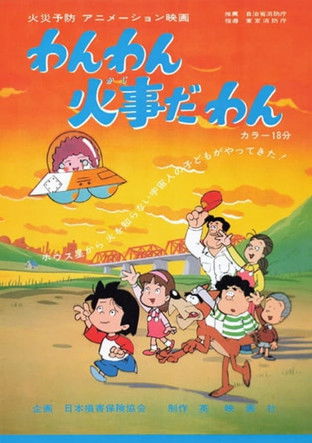
A short film about fire safety with a twist involving an alien in his spaceship working with the neighborhood kids.

1981

After the Unveiling

After the Unveiling 1981

1

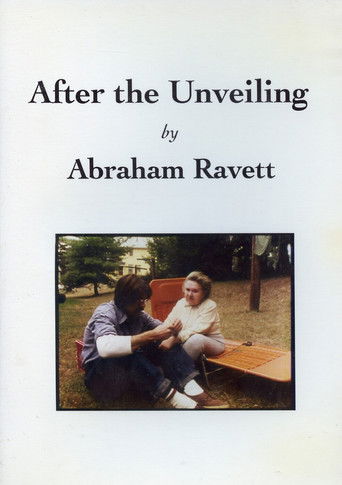
After the Unveiling is a film about change. It is a personal documentary done in diary format of my mother's life immediately following my father's death. It begins with cultural rites proceeding death, that of sitting "shiva," and goes on to record the many daily acts my mother once shared with her husband and now must face alone. Delineated, is the integral place that my mother's religion and culture holds for her, the inevitable influence it has on me, and the resulting conflict that is created for my mother and myself by me selecting a mate from a different religious background.

1981