
Two Crazy Bugs 1908
1908 French silent comedy film directed by Georges Méliès, which is currently presumed lost.
1908 French silent comedy film directed by Georges Méliès, which is currently presumed lost.
Early Balkan footage.
Lost Polish comedy short from 1908. Not to be confused with the 1916 remake of which a small portion survives.
1908 French short silent film directed by Georges Méliès, which is currently presumed lost.
A nightmare, sketched out upon a living blackboard.
A 1908 French short silent film directed by Georges Méliès, which is currently presumed lost.
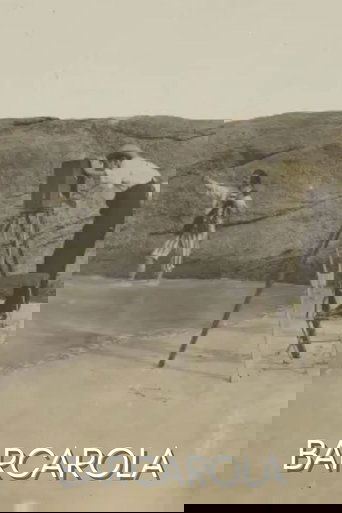
Barcarola is a 1908 Brazilian film directed by Júlio Ferrez. It was the first "sound" film in Brazil, that is, with actors dubbing themselves live, behind the screen, based on already recorded images. Premiered on September 1, 1908. It was produced by the company William e Cia. The film was inspired by the operetta "Les contes d'Hoffmann", by composer and cellist Jacques Offenbach. The film's synopsis is unknown, but given the name, which references the song "Barcarolle", it is very likely that it is inspired by the third act of Les contes d'Hoffmann. Like many films from this era, Barcarola is considered a lost film, with only one surviving image, taken during the film's production.

A handful of short tales of love, framed by leaf masks.
In one of his dreams, Don Quixote is fighting monsters. Having vanquished them, he goes to put on his armor, only to be met with a succession of strange events: first the armor appears occupied by a creature with stretching limbs, then a lovely young woman appears and sprouts butterfly wings. As Quixote approaches her, the wings become giant tentacles and attack him. Just as Quixote is fighting back and reaching for his lance, he wakes up to find himself pummeling his servant Sancho Panza. This film is currently presumed lost.
King Herod is enchanted by Salome's dance and grants her wish for the head of John the Baptist.
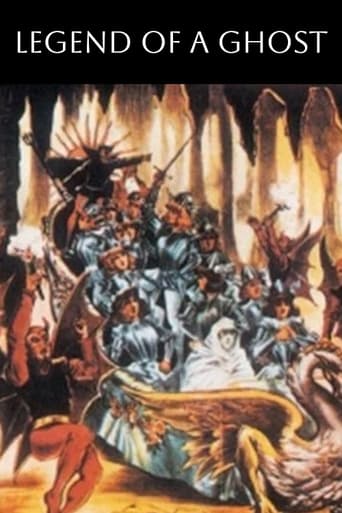
A young woman passing through a cemetery at night is suddenly startled by a voice coming from one of the graves. She wishes to rush away, but the ghost appearing compels her to remain. He explains to the terrified girl that she must go to the kingdom of Satan and get a bottle of the Water of Life, which she must bring back to him. The girl consents to do as he desires and starts forth on her expedition after the precious fluid. She summons a lot of soldiers and friends to her aid, and we follow the whole army down into the bowels of the earth. (Moving Picture World)
Early Balkan footage.
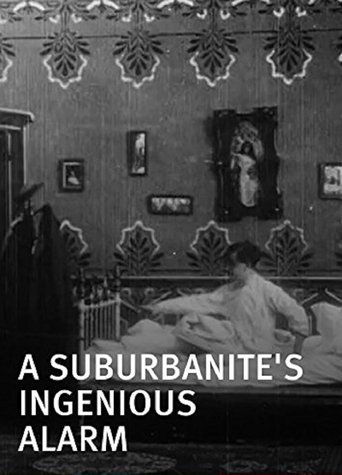
An office worker takes desperate measures in an attempt to get up on time in the morning.

Images from Grängesberg's mines. The ore is loaded onto trains and transported to the port of Oxelösund.
Released the same week than Selig's version, they both were the first film versions of the popular play, adapted from Ellen Wood's 1861 novel.

A housemaid is cleaning a studio. When she sees a sculpture of a nude woman in life-size, lying on a couch, she starts to compare this idealized body with her own. She takes off her clothes one by one, thus revealing her own naked body, and she compares the various parts of her body with those of the statue. The master of the house enters the studio. When he sees his housemaid naked, he tells her to go into the next room, and then goes into that room himself.
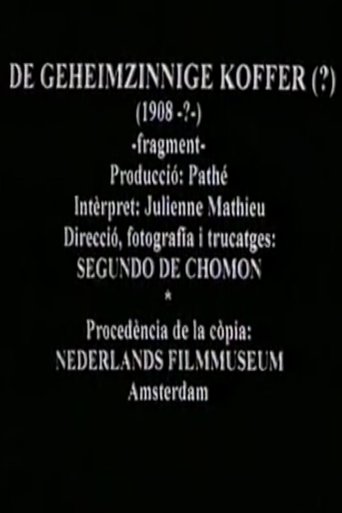
De Chomon film from 1908. Existing film is incomplete in length.
Stable hostler Joe loves his wife Annie, but she leaves him and their child for a wealthy gentleman, only to die destitute in London, where Joe's enduring love brings her solace in her final moments.
