
Bamboo Doll of Echizen 1963
Kisuke, a young bamboo worker marries Tomoe, a geisha who was once involved with Kisuke's late father.
Kisuke, a young bamboo worker marries Tomoe, a geisha who was once involved with Kisuke's late father.

A bright and cheerful story about a young girl who comes to Tokyo from the countryside, relying on her aunt to become a maid, and willingly aspires to become a maid and lives a healthy life despite the hardships she encounters with people from all walks of life. Ririko Tachibana moved to Tokyo in reliance on her aunt Motoko, who lives in Tokyo. When Ririko leaves her classmate Chizuko Misawa, who says she is going to rely on jazz singer Michi Nozoe, and arrives at her aunt's house, she is disappointed to find that a job has been arranged for her as a nanny. Her dream of attending night high school was dashed, but Ririko made up her mind to do her best to do as much as she could. The Honbashi family, where she was employed, lived alone with the widow Shinae, and Mrs Shinae was asked to go to her daughters' house to help out...
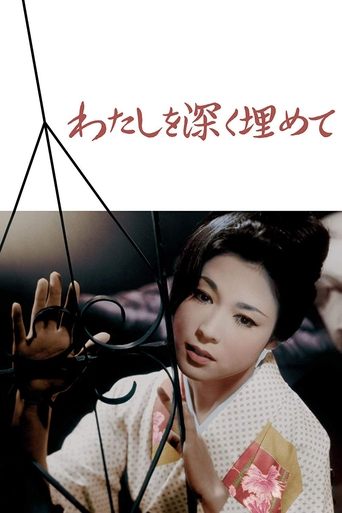
A suspense directed by Umetsugu Inoue, starring Ayako Wakao, depicting the intense lust created by the passion of a writhing woman.

The New Tale of the Flying Crane (Part 2)

Rabi'a al-Adawiyya is a classic film from 1963 based on the life of the early Sufi saint and poet Rabi'a al-Adawiyya, also known as Rabi'a al Basri, in the second Islamic century.
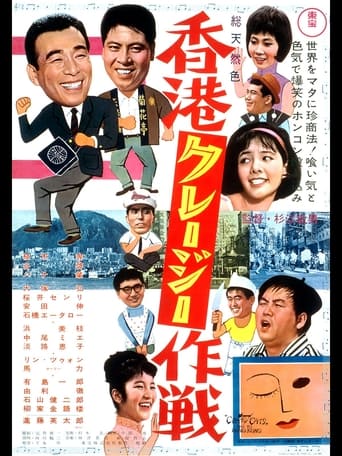
Comedy has the proprietors of a tonkatsu (deep-fried pork) restaurant match wits with a Chinese developer.

Prior to the adoption of Confucianism, it was the tradition to abandon one's parents on a mountainside if they were over 70 years of age. In the ancient kingdom of Goryeo, now modern Korea, a nobleman defies this tradition when he refuses to leave his mother to starve to death.
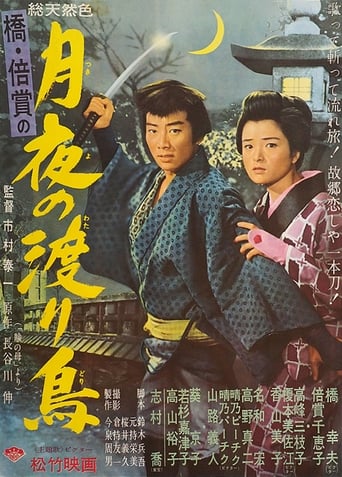
A resolute young man searching for his mother, whom he was separated from as a child, defies a family who mistreat the poor and homeless.

With her family suffering from extreme poverty, Yuko, as the eldest daughter, is sold to a successful brothel in Kyoto. There she is assigned to serve Takamatsu, one of the brothel’s top customers. But while Takamatsu falls madly in love with Yuko, she finds herself attracted to a young priest named Kunugida. Torn by jealousy, Takamatsu hatches an evil plan to tear them apart.
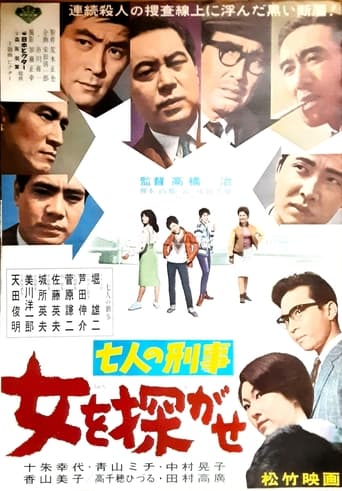
This is the second installment in the Shichinin no Keiji police procedural series.
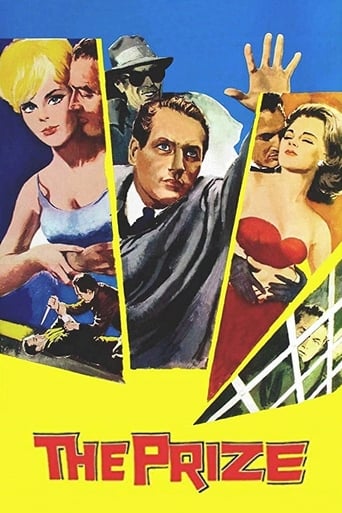
A group of Nobel laureates descends on Stockholm to accept their awards. Among them is American novelist Andrew Craig, a former literary luminary now writing pulp detective stories to earn a living. Craig, who is infamous for his drinking and womanizing, formulates a wild theory that physics prize winner Dr. Max Stratman has been replaced by an impostor, embroiling Craig and his chaperone in a Cold War kidnapping plot.
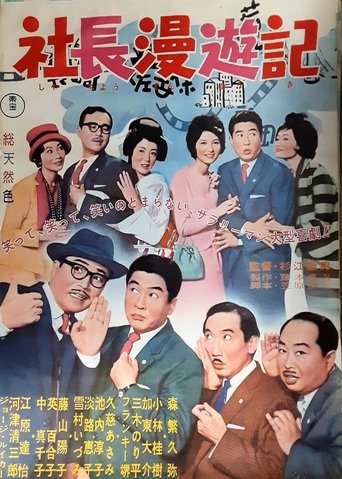
It is the 16th series of the call series with the highest masterpiece among the "President" series. The president of the U. s.solar paint, heitaro Domoto (Morishige), has become completely American, and plans to rationalize the company to the American style and prohibit the company's entertainment. Members of the Taiko Kyushu Branch Company (Ryohei Miki), who were living in the banquet, were hit by a big blow, and the company and the meeting club were very annoying. After that, the president who went to the business trip to Kyushu met with a sexy Geisha (Junko Ikeuchi) on the way to the tour, and he felt like a fool.

In 19th-century Russia, a peasant named Ivan Flyagin tells his his life story to fellow travellers aboard a steamship.

1963 Japanese movie

HK drama film.

Set in medieval Venice, this swashbuckler chronicles the courage of an executioner and his godson as they attempt to show that the Grand Inquisitor is in league with murderous pirates.
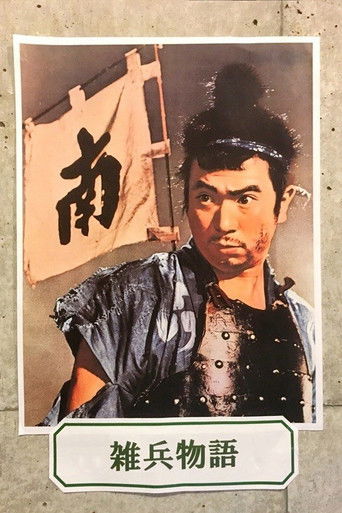
The warlords overrun the country while the farmers are starving, and forced to become soldiers to keep the wolf from the door. The farmers are recruited in groups of fifteen. In Yaju's village, there are only twelve men, so they press Oto, who looks more like a boy than a girl, to join, disguised as a man.
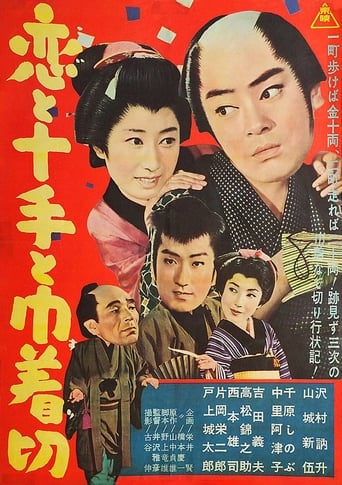

Director Iwauchi Katsuki adapted this melodrama from Sasazawa Saho's award winning novel about two young lovers from different sides of the tracks set against the backdrop of the Roppongi district in Tokyo. Masaaki (Minegishi Toru) is the son of a prominent judge and a Law student at university. Chikage (Nakagawa Yuki) is a teenager from an underprivileged home. Both are desperately looking for an escape from their lives when they meet in Roppongi one night and fall in love. But coming from such different backgrounds, their happiness isn't assured.

1963 Japanese movie
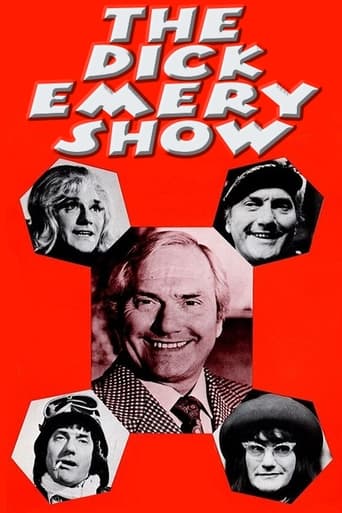
A British sketch comedy show broadcast on the BBC from 1963 to 1981, with frequent performers including Pat Coombs, Deryck Guyler, Roy Kinnear, Joan Sims and Josephine Tewson.

NBC Children's Theatre is an American television anthology series airing from 1963 to 1973. Its stories were primarily drawn from classical and contemporary children's literature.
Password was a panel game show based on the US version of the same name. It was orginally aired on ITV produced by ATV from 12 March to 10 September 1963 hosted by Shaw Taylor, then it aired on BBC2 from 24 March to 28 April 1973 hosted by Brian Redhead before moving to its flagship channel BBC1 from 7 January 1974 to 1976 first hosted by Eleanor Summerfield then by Esther Rantzen, it was then aired on Channel 4 produced by Thames from 6 November 1982 to 14 May 1983 hosted by Tom O'Connor and then finally aired back on ITV produced by Ulster from 22 July 1987 to 5 August 1988 hosted by Gordon Burns.

Mr. Piper is a Canadian children's TV series made in 1963. The series was created by Martin Andrews and Allan Wargon, who was also the producer.
Puffin's Pla(i)ce is a British regional children's programme named after it's star, Oscar Puffin, that's broadcast on ITV Channel Television on weekend afternoons. The programme, one of the longest-running children's series to air on the ITV network, has been broadcast since 3 March 1963. Originally presented by Channel Television's team of continuity announcers, recent Puffin's Pla(i)ce presenters have included Stewart McDonald, Kevin Pamplin, Sam Palmano, Lucy Anderson and currently, Jenny Mullin. In September 2013 it was announced the show would no longer be broadcast on TV, but would move to an online format at the Channel Online website. The last TV edition was broadcast on 15th September 2013.
Missing Links is a Goodson-Todman game show hosted by Ed McMahon which originally ran on NBC from September 9, 1963 to March 27, 1964.
Young Tim Cordon moves to the countryside and discovers an interest in the care of animals. Befriending local vet Mr Francis and his assistant Sheila, Tim is given some abandoned hamsters to look after and soon hits upon the idea of setting himself up as an animal hotel.
People Will Talk was an American game show that aired on NBC from July 1 to December 27, 1963. The host was Dennis James, with Kenny Williams announcing. In 1964, packager Heatter-Quigley Productions revamped the program under the name The Celebrity Game, with host Carl Reiner at CBS Television City in Hollywood.
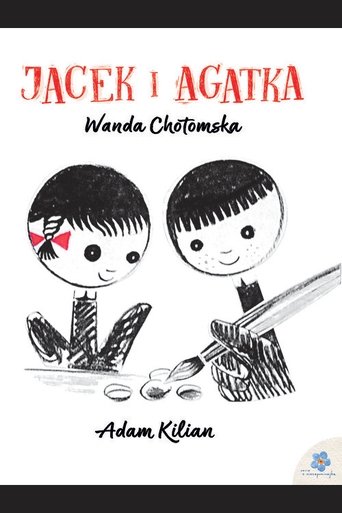
It was the first Polish television show intended for bedtime. Featuring finger puppetry, the show centers on the young siblings Jacek and Agatka who explore children's topics and curiously crafted ideas
Produced in 1963, "Sam Bassett, Hound for Hire" is a quirky, bizarre and hilarious series of short cartoons that almost defy description. Sam Bassett, a Bogart-esque Bassett Hound and his partner, a mute Chihuahua named Chapultepec (who "talks" by playing his mariachi guitar) attempt to solve mysteries that somehow usually involve psychotherapy.
100 Grand is an American game show hosted by Jack Clark. The series ran for three episodes, weekly on Sunday nights from September 15 to 29, 1963 on the highly-touted "New ABC" as the network's attempt to bring back high-stakes game shows after the quiz show scandals of 1958. When 100 Grand made its debut, it had been two years since any large jackpots comparable to the quiz shows had aired on any broadcast network, and it would be over a decade more before six-figure jackpots returned to television.