
Mémoires Filmiques 1981
A homage to the 80s experimental cinema. A poetic play manifesto about this form of expression that at the moment had a huge development.
A homage to the 80s experimental cinema. A poetic play manifesto about this form of expression that at the moment had a huge development.

Plexi Radar is the act of filming a gyrating motion of a circular plexiglas sculpture, which is then looped by a computer. The image of the sculpture alternately divide in between some hypnotic shots in which subconscious impose the illusion of a constant change of frame.


The last in Phil Munnoch aka Captain Zip's series of 8mm portraits of the London punk scene captures the movement in decline - and Chelsea's last gasp as a bohemian enclave. Zip's extended family of young punks - including Katie Thunder and Wobble - are still a close-knit bunch, defiantly living it up on the Kings Road. But by 1981 they were a tourist attraction, posing for photos with curious straights for a few quid.

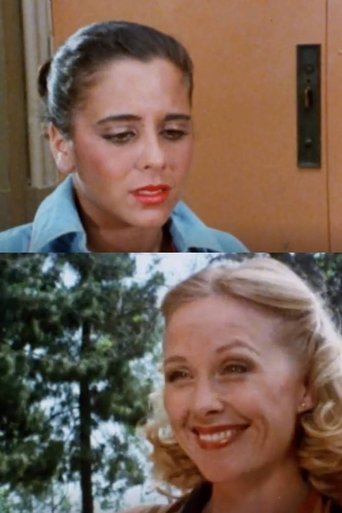
After school special type short about illiterate high school students.
Margaret Hixon's 1981 film documents a real-life wedding in the Old Believer settlements of Marion County, Oregon, in the years 1979 and 1980. The film briefly touches on a wealth of traditional arts (embroidery, clothing construction, weaving, vernacular architecture, folk song and foodways) and beautifully presents a whole series of rituals -- the "devichnik" (engagement party), "selling" the bride and her braid, the wedding feast, the bargaining over the dowry, and the ceremony of bestowing gifts and advice on the newlyweds. In English and Russian with subtitles or voice-over translations.

Joy Unspeakable is an ethnographic film that examines the question, what does it mean to be Pentecostal, through the documentation of three types of Oneness Pentecostal services in Southern Indiana: a gospel-rock concert, a regular Sunday service, and a camp meeting. Religious behavior, doctrine, and social values are discussed by several Oneness Pentecostal church members and ministers in interviews interspersed with footage of the various services.
Short political documentary.
The Laziest Girl in Town features the transvestite antics of Morrisroe, Stephen Tashjian (Tabboo!), and Jack Pierson, culminating in an obscene sequence reminiscent of John Waters' Pink Flamingos.
On 12 July 1981, six small airplanes, flying in perfect formation over Santiago, Chile, dropped 400,000 flyers discussing the relationship between art and society.

This superbly animated science film traces the evolution of North America from the Earth's geophysical beginnings, through the genesis of the first living organisms, right up to the arrival of humans. Radiant colours and smooth-flowing animation evoke sizzling lava rivers, oceans bursting with life, and freezing ice ages. The film provides an excellent view of the time frame within which these remarkable events took place and highlights the fact that, relatively speaking, we are newcomers to Planet Earth.
In December of 1981, Japanese graphic artist Ryoichiro Debuchi shot one of the earliest films that experimented with a time-slice or bullet-time effect. Using 18 still-cameras with set bulb arranged in a 360 degrees sweeping arc around the central model, and three synchronized flashes arranged around a central model. The original was a super 8 film Screened at Pia Film Festival '82. Ryoichiro is an artist in the fields of Computer Graphics, Computer Animations, Programming Art, Virtual Worlds, Real-time 3D Works, 3D Bots, Interactive Art, Media Art, and Handmade Electronic Instruments. Also a programmer in the field of graphics.
...a "mordantly nostalgic" sojourn across America. A landscape of mute streets, empty rooms and serene fields; the remains of a civilization which has momentarily disappeared.
Produced by Carol Munday Lawrence as part of the seven-part "Were You There" series
A frightening vignette about violence and hatred in American society.

Blekbala explores the lives and aspirations of Aboriginal people living in the Northern Territory - on small outstations, remote desert locations and in regional town - from Arnhem Land to Central Australia. It looks at a selection of Aboriginal-run businesses and enterprises: cattle stations; children’s education; community projects; sports and music.

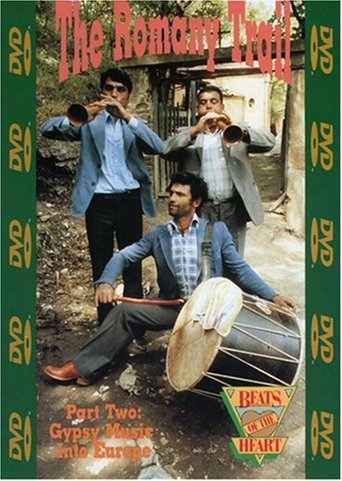
The Romany Trail Part Two is a penetrating, provocative tour of a fabled people’s existence. It reveals the prejudice they still face daily and which they combat with the lyrics and music they have carried and adapted on their long migrations. Featuring: The music of Django Reinhardt, the ballads of the Holocaust, Hungarian folk musicians and professional restaurant bands, pipers and the greatest names in Gypsy entertainment.
