Mergulho 1982
A man jumps into the abyss holding the key to love.
A man jumps into the abyss holding the key to love.
A vampire is frightened by the reality of urban violence.
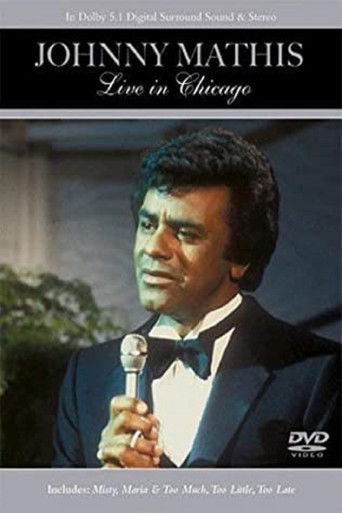
Johnny Mathis, byname of John Royce Mathis, (born September 30, 1935, Gilmer, Texas, U.S.), American pop singer who achieved wide and enduring popularity as an angelic-voiced crooner of romantic ballads. He was perhaps best known for his affecting rendition of the Erroll Garner composition “Misty” (1959). Mathis grew up in a large working-class family in San Francisco. He developed an appreciation of music from his father, a former vaudeville performer, and, as a child, he sang regularly in church and at school events. From age 13 he also took vocal lessons, which provided him with a classical foundation for his burgeoning talent.


Short film by Ugo Nespolo.

A boy climbs a wall to take a closer look at a snail that slowly moves along its edge and encounters an alien world. Among sheets and white clothes drying in the sun, there are two young girls playing with a bag that floats above them as if by magic.
Animation by Jeff Wein
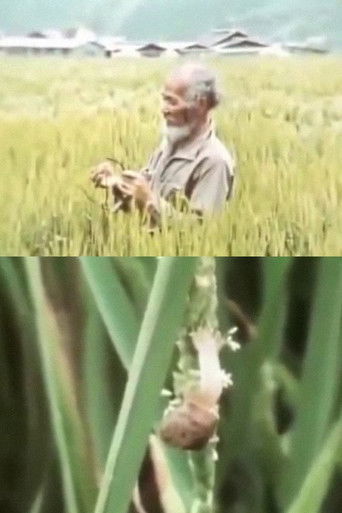
Mr. Fukuoka has decided not to plow, not to grow rice in flooded fields, and not to use machinery to sow or harvest. What he does do on his farm is documented in this unique record of a full year of overlapping crops.

One of my very first films, for which I hold the camera at arm's length and thereby capture fragmentary and very close images of myself washing my face or combing my hair; all interspersed with photos at different ages.
A documentary about Icelandic immigrants who moved to Brazil in the 19th century. Their path is traced and a visit paid to some of their descendants.
INVISIBLE is based on the prologue of the classic novel, Invisible Man by Ralph Ellison. In adapting this portion of the novel, the film spotlights the nch variety of Black culture upon which it draws, simultaneously transmitting the underlying rhythms of the prose. The film deals experimentally with internal and external; that is, what the narrator sees as reality on the outside is at the same time being felt (and shown) from the inside of his being. This is also a techmgue characteristic of Ellison's novel.
Part one of Edwin Cariati's Diary of an Autistic Child cycle.
A film by David Gerstein
This film was originally shot with unusual Fuji single 8mm film and developed from the maker’s experiments with unconventional projection speeds that were made possible with the Bolex “toaster” projector. By incorporating a serendipitous laboratory event, the resulting film emerged from the maker’s submission to a constructed accident. She ultimately rephotographed, enlarged and altered the small gauge footage using an optical printer.
"In Zdravic's film we see imagination reconstitute Nature through Technology. The process is complicated; cruel, yet caring, beautiful and grotesque. The result– a hand, let us say, whose missing thumb is now a toe– is at one and the same time magnificent in its revobered grave and monstrous in its form. Looking at such an image, we must question all 'natural' sentiment and aethetic 'givens,' for Zdravic's film has shown us the deeper beauties of imperfection." -Dick Blau
The tensions between the beauty and decay of death.
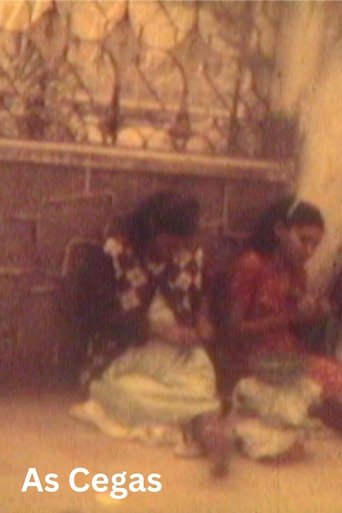
A film about three blind women struggling to survive in Paraíba.
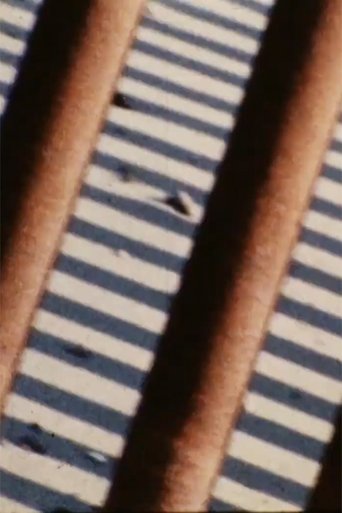
East Coast responds to the textures, forms and elemental light play observed along a stretch of coastline in Happisburgh, Norfolk. It was first screened on BBC 2 television in the UK, where it was likened to the work of visionary film maker Pat O'Neil and his innovative multilayering of images using optical printing. This film creates similar effects by exposing each roll of film up to five times, using a Bolex 16mm camera. The film opens at Wells Next the Sea, and observes beach life in the gaps between the long row of beach huts. A fast film stock adds an intense painterly grain to the scene. The movement of waves drying on sun bleached sand are overlapped and rendered as kinetic abstractions. Each sequence is accompanied by a montage of natural sounds, which seek to suggest a musical equivalence of treatment, alongside the visuals.

Right after the Red Army in 1944 was deliberating a little village, Veszto in eastern Hungary, the locals formed their "government", excommunicated the goods remaining in the village and distributed them among the poor. The social experiment only lasted two months, but this episode later became infamous in the communist press of Hungary and was referred to as 'Republic of Veszto'. 35 years later, in 1979, the actors and the witnesses, the representatives of the communist administration back then and the poors of the village get together in a little pub in Veszto and try to resuscitate and evaluate those old days. The memories clash one another.
