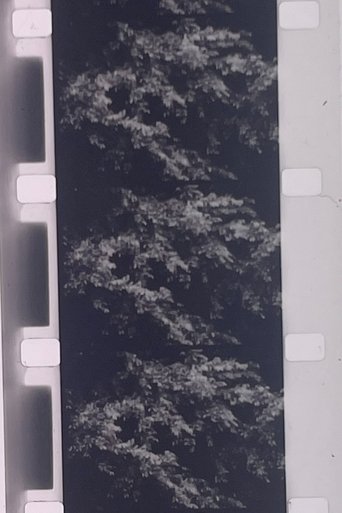
Plotting the Grey Scale: 2 or 3 Quick Traverses

Plotting the Grey Scale: 2 or 3 Quick Traverses 1985

1

“A monochromatic field study of sorts, along perpendicular axes. Varying shades of grey flicker in increasing intensity, giving way to a kinetic study of activated organic forms deriving from rapidly changing optically printed freeze frames of trees. A variation on the grey flicker recurs, climaxing in a modestly manipulated study of leaves moving in the wind. Overall, this unusual and visually affecting film brings together some of Worden’s most elemental interests, including stasis, motion, rhythm, visual consonance and dissonance, and the tension between the pictorial and the abstract, all with a characteristic phenomenological undercurrent.” —Mark Toscano

1985

The Great Chastity Experiment

The Great Chastity Experiment 1985

1

Focuses on teenage relations and sex and suggests that real closeness and intimacy can be achieved through shared experiences other than sexual intercourse.

1985

Alphabet Uppercase

Alphabet Uppercase 1985

1

Emphasizes the uppercase alphabet and beginning sounds in seven short segments using original music, animation, puppets and live action.

1985

La Sieste Pittoresque

La Sieste Pittoresque 1985

1

As I was visiting my great friend the painter L ..., I surprised him during his nap. Indeed, after several exhibitions, he took a well-deserved rest. When he woke up, he told me: "It is not so easy to rest from Art. I have the pretty formula 'a workshop in my head.' I just dreamed of a painter."

1985

Aporia Series: Aporia V

Aporia Series: Aporia V 1985

1

"A narrative so to speak, a threatening environment, a space which opens up in a 'wall,' revealing, a threat that speaks across mediumistic boundaries." – Ed Schwartz

1985

Saint Joseph: The Saint of the Indians

Saint Joseph: The Saint of the Indians 1985

1

During the period when the Great Emperor Constantine the Great was considered the Great Emperor, that is, in the 4th century AD, Avenir reigned in India. He acquired a son, Joasaph, for whom astrologers said that when he grew up he would become a Christian. When Evenir heard this, he became agitated, anxious, and, in order to thwart this urge, locked Joasaph in a remote palace. He advised servants and teachers never to speak before him about the faith of Christians. As the years went by, Joseph grew up and received a brilliant education, but he could not banish melancholy and apathy from his limitations. He asked to know why this was happening, but no one answered. His father once allowed him to go out for a walk, but under strict surveillance. On one of his walks he met two poor elderly people, approached them alone and gave them generous alms. Excited, they revealed the secret of his limitation. From then on, he was thirsty to learn about the Christian faith.

1985

Saint Moses the Ethiopian

Saint Moses the Ethiopian 1985

1

Saint Moses was a bought slave of a wealthy landowner. He had a tough and awkward character and created a lot of problems every day, until his boss got angry and threw him on the street. Moses found refuge in a banditry and with his enormous physical strength it was not long before he was forced to become its leader. Once, chased by the authorities, for his many crimes, he went to hide deep in the desert where the most famous ascetics lived. His fellowship with the saints slowly made him date. He was overshadowed by the Grace of God, because repentance is a time of Grace, his heart softened, he truly repented and asked for redemption. His change was radical and in a short time he reached the measures of the great Fathers of the desert.

1985

The Greatest Hits of Scratch Video Vol. 1

The Greatest Hits of Scratch Video Vol. 1 1985

1

By using television images as its raw material, Scratch positioned itself, and video more generally, as the medium for a more dynamic, more interactive mode of image-consumption, and even a more networked mode of viewership—as the group Gorilla Tapes later put it, Scratch was a way of “talk[ing] back to television.” Enabled by the development of innovative professional and consumer video technologies, artists like Gorilla Tapes, George Barber, and Sandra Goldbacher and Kim Flitcroft deployed a style characterized by the rapid sampling, editing, and manipulation of dissociated images drawn from video archives and broadcast television. Exploiting this newly available battery of tools, Scratch Video artists warped, composited, windowed, posterized, keyed, colorized, and superimposed these images, exploring uncharted aesthetic terrain that in many ways anticipates, and has strongly influenced, the types of image-manipulation made possible by today’s digital image software.

1985