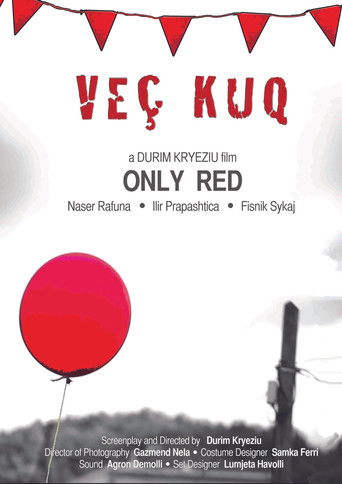
Only Red 2013
Kosovo in 1990. Two Serb policemen terrorize an Albanian rural community by forbading them to paint red color elsewhere and obstruct their gatherings.
Kosovo in 1990. Two Serb policemen terrorize an Albanian rural community by forbading them to paint red color elsewhere and obstruct their gatherings.

While the temperament of the minor Shukria is slowly developing, she shows us the primitive way of thinking of the patriarchal society and the role of the woman at that time until now. The story takes place in a little village in Kosovo. From her view, we are in a sort of “Paradise on Earth” where she meets her sister, her mother then even herself attempting to stop her marriage.
Phoebe, a successful writer and activist, lives in isolation in her apartment with her daughter, Aria, during the pandemic. After a normal day of reading comments and statuses on Facebook, tensions begin to rise when Aria insists on going outside. Phoebe, scared and filled with doubt, experiences a moment of panic when she thinks Aria has run away. After a period of searching, Phoebe finds Aria and, to relieve the tension, begins to jump out of the window, leaving everything behind.
Elda, a 20-year-old girl passionate about taekwondo, faces a great challenge when she enters a duel against Celina, a powerful rival, despite having a broken left hand. Despite the pain and fear, she finds the strength to continue. With courage and determination, Elda secures victory, but her greatest act comes after the match, when she extends her hand to Celina, showing that true strength lies in respect and compassion for the opponent.
Adelina, a quiet hotel waitress, develops a deep obsession with a mysterious guest who has been staying at the hotel for a long time. Drawn deeper into his world through sensitive observations and fleeting moments, her growing obsession drives her to make decisions that jeopardize her job.
Village women from Kosova share their life stories and abandoned dreams. Behind thick walls, silence and years of longing for school, the voices of these mothers, grandmothers and workers weave an intimate portrait of overlooked realities.

Society becoming more immersed in the digital world, it’s important to be aware of the digital exposure. This documentary aims to inform about the importance of sharing (sensitive) information on the web, with focus on social media. Bringing attention to the current paradigm shift of generative AI usage in everyday life and the continuous coevolution between humans and machines executing programs.
"Pashtriku" follows the story of two sisters as they revisit the holy mountain of Pashtrik.
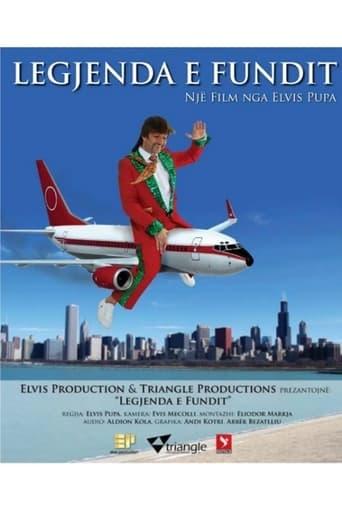
The adventures of an Albanian who landed in America.
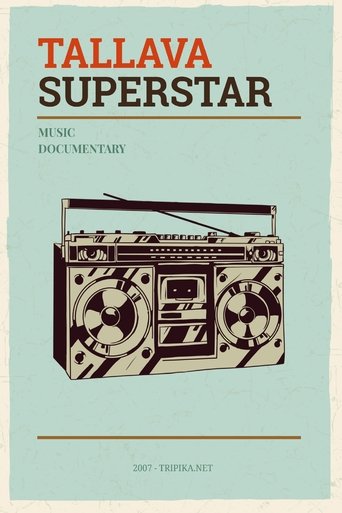
This documentary is a "small study" on social and cultural changes that grew during the time of us growing up. It's a personal perspective of young individuals on music and the phenomena of "tallava" in it. We believe that "tallava" is an adopted form of music implanted in the Balkan folk. We see this as reflection political and social events that took place during the last 15 years, time in which this specific type of music developed. This film would be platform for various thinkers, musicians and "tallava" performers to share their ideas on the short and long term effect of this social/cultural phenomenon. The aim of this documentary is to portray the influence and the causes of this music in the global culture of the region. Also this documentary is a personal journey of a generation to understand in a larger scale what are the consequences advantages of this kind of media representation.
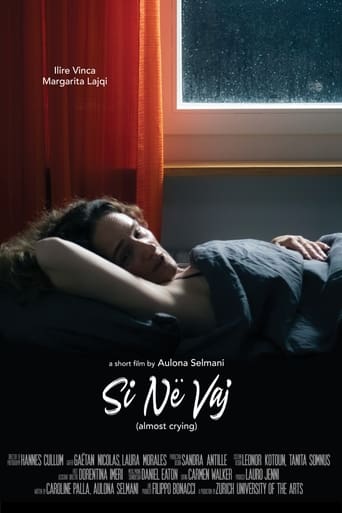
Once a young widow, Nadie is under constant scrutiny from her rebellious sisters-in-law. But then a self-portrait from her past emerges and calls her way of life into question.
Flora, a journalist in a Western country, comes to her homeland to trace the early life/identity of Mother Teresa or Anjeza Gonxhe Bojaxhiu, to produce a feature. But soon she will face the surprise of her own identity. Two different lives, in search of their identities, so badly effected by the past, during the communist system.
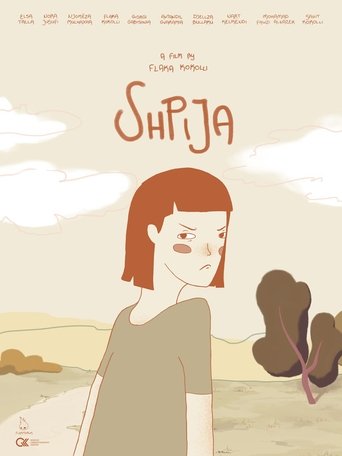
Home and comfort can often be found in things that shame, trap, and damage us. Leaving that home can be difficult, but having it as a poltergeist that follows you around proves to be even harder.

A story about a mountain man and his struggle to save the forests of the Rugova Mountain from over-logging and environmental destruction. As we learn the stories of his youth, growing up in those mountains with his brother, we begin to understand the history behind Fatos’ frustration.
When it left, death didn't even close our eyes centers on the testimonies of laborers working in Kosovo’s construction industry. They attest to how this precarious and unregulated labor market has serious human costs to those that have to seek its employment. Speaking of how they are expected to work hours—from 12, 13, 15, even up to 24 hours—and in conditions far beyond prescribed regulations or normal human expectations. One of the primary consequences is a high rate of injury, which then precludes future work in the industry—some workers even admit that they would rather face death than lose the ability to earn a living.
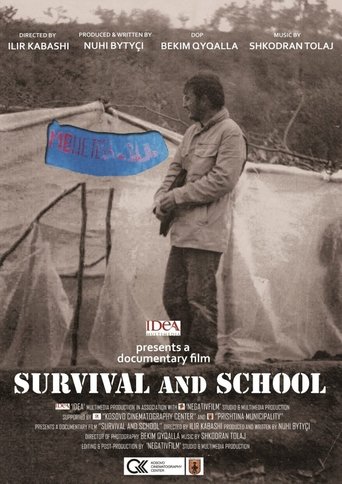
“Survival and School” is a beautiful story about the bad and evil times. An oasis of peace in war time. A nylon school built in the Berisha Mountains (Kosova) that had gathered around 200 pupils of the surrounding villages. The fate of people seen in the twenty-year-old authentic and timely shooting in quite different circumstances reveals the best the bad fate of man.
In the 1960s after Albania's break with the Soviet Union, the country became an unlikely satellite of communist China (Newsweek referred to the alliance as ‘Mediterranean Maoists’). Enver Hoxha called the bond between the two countries the ‘coming together of the 702 million’, China being the 700 million, Albania representing the two. In exchange for its chrome exports and introducing the 1971 resolution that got China into the United Nations, Albania received sustaining economic and military support. This short documentary focuses on the Chinese table tennis team’s friendship visit, which soon began to sour after US president Richard Nixon visited Beijing.
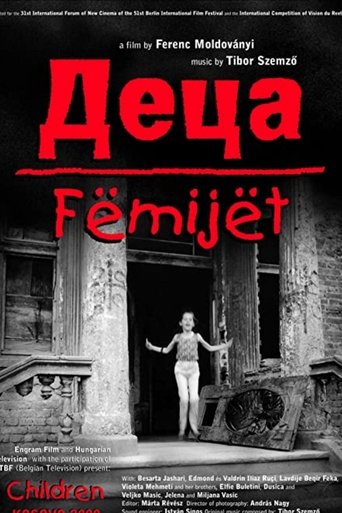
Kosovo in the spring of 2000. Winter is over but in a meteorological sense only. Ruins and pain. The marks of devastation in the sunny landscape. Wounds that never heal, the hesitating , vague gestures of a new beginning. Paradoxes. In black and white, with the broken images of memory imprints in color. Two words: deca and fëmijët , they mean children in Serb and Albanian. These expressions have no place in the irrational dictionary of war. It is the children though who are the most defenseless victims of this war governed by mad hatred. Their suffering has become an indelible chapter of the chronicle at the end of the century, the dawn of the new millennium. Besarta, Violeta, Edmond and Valdrin, Miljana and Jelena are Albanian and Serb children, the film tells their story in black and white with color Super 8 images shot by the children themselves.
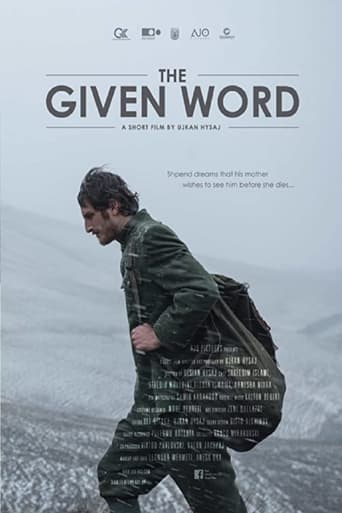
Shpend dreams that his mother wishes to see him before she dies...
Made during the violent civil unrest that rocked Albania in the 1990s, directors Nova and Faja have handcrafted a searing vision in which a demonic appearance brings chaos to a quiet hamlet.
