
Fun in Camp 1899
“Showing a group of soldiers and Red Cross nurses being amused by a number of small children who are riding upon the backs of trick bears. A remarkably fine picture, with U.S. Infantry camp in the background.” (Edison film catalog)
“Showing a group of soldiers and Red Cross nurses being amused by a number of small children who are riding upon the backs of trick bears. A remarkably fine picture, with U.S. Infantry camp in the background.” (Edison film catalog)
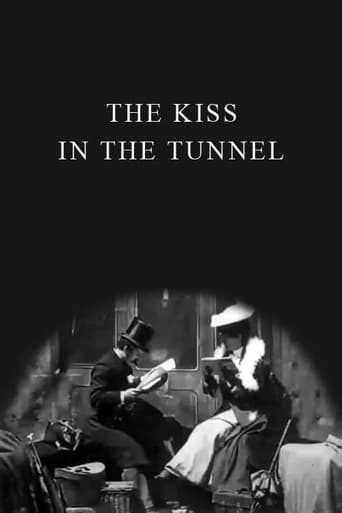
Produced and directed by George Albert Smith, the film shows a couple sharing a brief kiss as their train passes through a tunnel. The Kiss in the Tunnel is said to mark the beginnings of narrative editing. It is in fact, two films in one, hence the 2 min length. Firstly, the G.A. Smith film here for the central cheeky scene in the carriage. The train view footage however is Cecil Hepworth's work, entitled 'View From An Engine Front - Shilla Mill Tunnel', edited into two halves in order to provide a visual narrative of the train entering the tunnel before the kiss and then leaving afterwards. More information about the filming of the phantom train ride can be found searching for the Hepworth film separately.
A reel of the Noh drama Momiji-gari, in which Danjuro Ichikawa played opposite Onoe Kikugoro V as an ogress who has disguised herself as the Princess Sarashina. Filmed by Shibata Tsunekichi in the open air on a windy day in November 1899, Danjuro would allow only the one take, so that when his fan blew away in mid-performance the scene had to stay. The film re-emerged at the Kikikan theatre in 1907 where it was a great success and inspired a wave of fiction filmmaking based on traditional Japanese narratives.
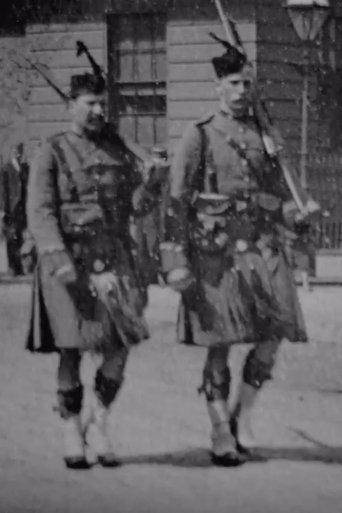
An embarkation reportage film from the Boer War, a popular film subject at this time. Soldiers with bicycles appear in this parade. The British Army began using bicycles from the 1880s, to expand from horse transport for men. Supplying bicycles to the the army was considered a positive business move for companies as they began to experience a public decline in sales once bicycles were no longer a novelty and inferior copies began to be marketed. Films such as this would have been seen as having a wider importance.

Panorama of the battleship "Brennus" flagship of the French fleet
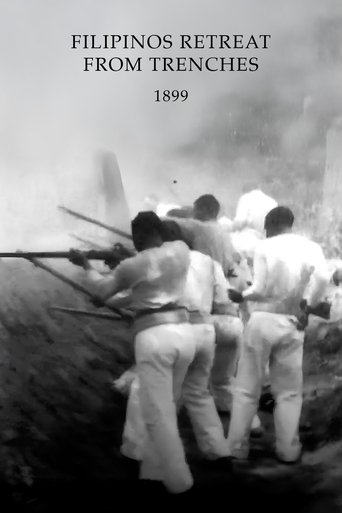
Reenactment of action in the Spanish-American War.

Spectators on the quayside at Southampton wave farewell as the crowded troopship Roslin Castle moves away to the right of the picture. Large numbers of troops on board wave back to loved ones and the crowd including thr 2nd Battaliion West Yorkshires. Date: 20th October 1899.
Panorama of a mountainside railroad.
Kaiser Wilhelm II appears before the people in Damascus.

Vietnamese children collect coins that are thrown them by two aristocratic ladies.
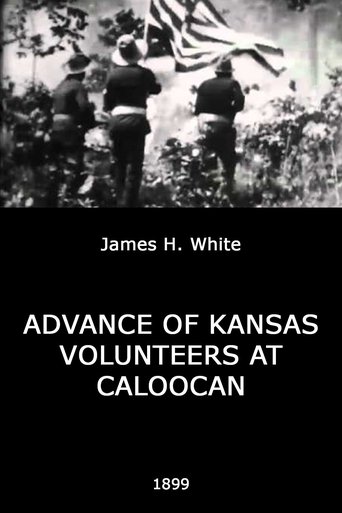
Recreation of military maneuvers in the Philippines in the Spanish-American War.
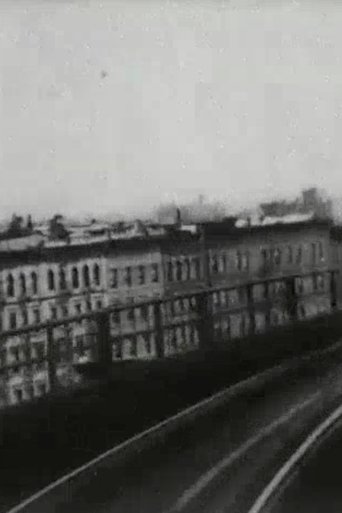
Taken from the front platform of a special train run backward over this celebrated S curve. Not only are the passing trains and crowded platforms of great interest, but the view of uptown New York is an excellent one, showing acre upon acre of roofs, towers, steeples and towering apartment houses. As the 'special' slows up at 92nd street, a Harlem express dashes by, the engineer leaning out of his cab, and waving a good-bye.
A young woman in traditional Japanese attire fixes her hair and kimono while her servants assist her.

One of eleven installments of The Dreyfus Affair (L'affaire Dreyfus), a docudrama reconstructing the historical Dreyfus Affair, which was still playing out as the series was being filmed. This film is the last of the 11 installments in the "Dreyfus Affair" film series by Georges Melies. Notable for the fact that this last segment was banned from the public as disputes broke up at the viewing of it, and today it is one of two films that is currently not available to the public.
“This is a new negative showing the entire trip from Brooklyn to New York, in which the immense towers stand out clear and distinct against the sky. Positively the best picture of the Brooklyn Bridge yet secured.” (Edison film catalog)
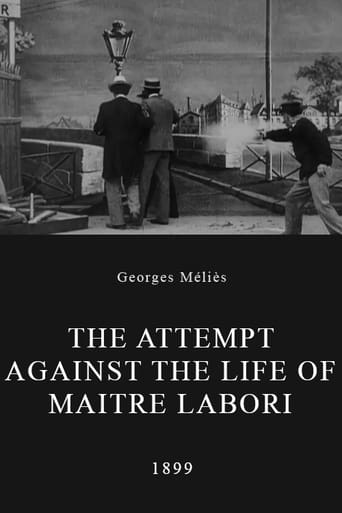
Maître Labori is seen approaching the bridge of Rennes in company with Colonel Picquart and M. Gast, Mayor of Rennes. They notice that they are followed by another man to whom Colonel Picquart calls Labori's attention. They, however, consider his proximity of no importance, and continue to speak together. As soon as their backs are turned, the man draws a revolver and fires twice at Maître Labori, who is seen to fall to the ground. The culprit makes his escape, pursued by Colonel Picquart and M. Gast.
'Armed Robber Shimizu Sadakicchi' is considered Japan's debut film and came on the heels of the country obtaining its first film camera. It famously was only a couple of minutes' long as its film reel was only seventy feet long. It featured who is considered to be Japan's first film actor Unpei Yokoyama who was one of two actors in the film. It features one scene where a robber is apprehended by the police.
A group of riders demonstrate equestrian vaulting, or voltige, on the outskirts of Prague.
Edison released this as part of their "Northern Pacific Rainway" and "Alaska and Yellowstone National Park" series.
The Buffoons are artists in their line. They tumble in and out of trick doors, disappear and reappear in unexpected places in most unexpected ways. Sure to amuse the children.
