Festë e madhe 1973
The documentary shows the tour of performances throughout Albania by the national folk song and dance ensemble.
The documentary shows the tour of performances throughout Albania by the national folk song and dance ensemble.

The Albanian transition has obliged Loro Shestani to give up: his wife is dead, his daughter is a refugee in Italy and has forgotten her roots, the sea does not offer fish any more. Loro has passed over the middle of his life and he has understood that his life is in vain, he is not prepared to accept this new world. He shares his solitude with his pigeons.
“Prizren - the City of Resources and Beauty” is a documentary directed by Zvonimir Saksida and produced by Zastava Film in 1972, which presents the history, traditions and beauties of Prizren with the aim of promoting the touristic potential of the city. Discovered in the Lumbardhi Cinema archive, it was screened for the first time during the exhibition “At Once Vague and Unavoidable: Modernities 1945-1989” produced as part of the partnership between Lumbardhi Foundation and Oral History Initiative within the project “Prizren Urban Memoryscapes” supported by Franco-German Cultural Fund, the French Embassy, the German Embassy, Municipality of Prizren and Sharrcem. The restoration and digitization of “Prizren - the City of Resources and Beauty” was made possible by the partner of the project, the French National Audiovisual Institute - INA and the French Embassy.
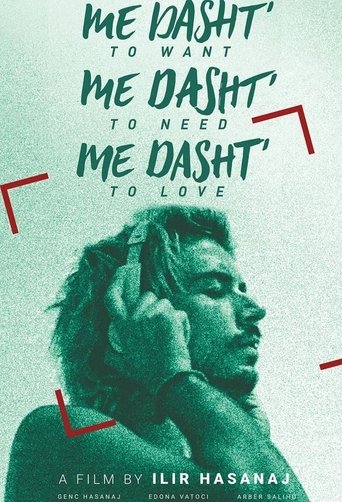
Three young people visit three cities over three months as part of an ambitious and transformative art project that creates musical and performance pieces.
Can heartbeats be “reactionary”? Yes, if they are the only sonic element on a montage-heavy documentary about the war dead. Made just before Enver Hoxha’s cultural purges in 1974, Dhimitër Anagnosti’s formalist, wonderfully edited affair will finally premiere in a restored version after its completion forty-two years ago.
Documentary about Congres VI of the Women's Union.
Games and precautions in winter from the perspective of a child.
Intervista seeks to deal in microcosm with the issue of how Albanian communist-era elites have sought to justify their roles in the now-discredited regime that ruled the country for nearly half a century. This brief film offers some poignant vignettes of contemporary life in Albania... [and] also underscores the reluctance of Albania's former Communist elite to confront its past. Both the quality of its content and its length make Intervista a potentially valuable instructional resource
Albanian LGBT community members appear for the first time with their non hidden faces and names and share their personal stories about how the LGBT movement has changed their lives.
A story about life of Sureya Imami - the first Albanian music teacher in Macedonia.
When his car breaks down in a desolate rural area, Noir, an emotionally lost actor, accidentally meets Anna, an enigmatic girl who walks through the landscape as if he doesn't exist. Following her, he is drawn into a strange and poetic journey, where Anna's pauses and the landscape awaken hazy memories of a lost love. As reality and memory intertwine, Anna leads Noir to an old cemetery, where he discovers that she is long dead. Confronting her grave becomes his moment of awakening, realizing that the journey was a spur to accept the pain and restore meaning to his life.
The story of some girls in a colossal moment
The film depicts major political events in the former Yugoslavia, starting in 1968 and continuing until the end of the war in 1998, seen through the eyes of the main protagonist, Lili, who is a witness of these events.
This documentary shows high school students in the place where they poof their problems away, the place where they enjoy breaking the school rules.
Termokiss Has No Borders is a short documentary exploring the power of community through the story of Termokiss, a once abandoned building in Prishtina transformed into a vibrant, inclusive space for activism, creativity, and collective action.
In a crumbling Balkan home, The Attic offers a nostalgic farewell to forgotten treasures. This intimate documentary explores the memories hidden in dusty books, flickering TVs, and mysterious relics, revealing how ordinary objects quietly connect generations. With warmth, humor, and a touch of sadness, it shows that even forgotten places hold meaningful stories.
When Erza, Erenik and Andi's ideas get rejected, they discuss how their films could play out through Betmeni, Ketwomeni and Ridlleri. Through humorous tones and playful settings, their film accomplishes to portray three very special narratives.
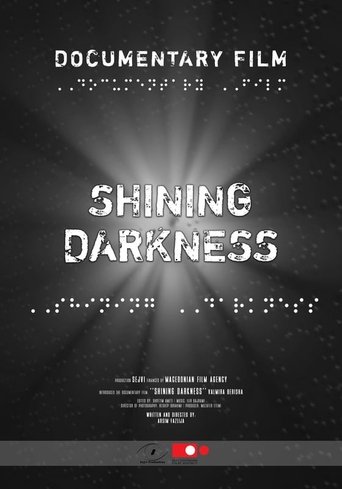
Berisha family from Prizren, Republic of Kosovo are the heroes of this documentary film. They are six members, Nebi – the father, Zelije – the mother and four children, Valbona, Valon, Valmira and Diellza. Besides Valbona, the other children of this family from the age of 7-8, have completely lost their sight due to a disease that causes the extinction of the eye stem cell.
Trapped in a vicious cycle of personal disappointments and unfulfilled fantasies, a man-the head of a household-suddenly decides to give up everything: his job, responsibilities, and social life, to pursue a long-abandoned dream of becoming a boxer. Convinced that this is the way to reclaim control over his life and the respect he's lost, he embarks on a solitary and difficult journey toward a dream that no longer recognizes him.
