
Javanese Dance 1900
Cléopâtre-Diane de Mérode (27 September 1875 - 17 October 1966) was a French dancer of the Belle Époque. She is seen here performing a traditonal Javanese dance.
Cléopâtre-Diane de Mérode (27 September 1875 - 17 October 1966) was a French dancer of the Belle Époque. She is seen here performing a traditonal Javanese dance.
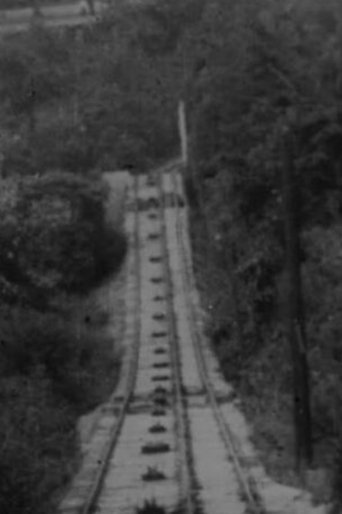
Take an exhilarating ride on one of the most spectacular rail journeys in the world, the Hong Kong Peak Tram. The route opened in 1888, and this 'phantom ride' (a popular early film genre for which the camera was mounted on a moving vehicle) offers glimpses of the harbour and lower Hong Kong in the distance as you descend from 400 meters. But as a funicular railway, the most heartstopping moment is the sight of the upward tram arriving on what looks like a collision course...

This film title is almost, though not quite, false advertising. There's certainly a gale, and a wrecked ship, but the one didn't cause the other. This early film records a brutal storm with a close view of waves crashing over a wreck - an empty, broken ship that had beached some time before. Still, the wreck gives a sense of scale to the ferocity of the weather, and is a stark reminder of the damage that a gale can do.

Southampton High Street, train view
Cavalry cross the river in enormous number. Occasionally a horse stops to take a drink, and then walks on.
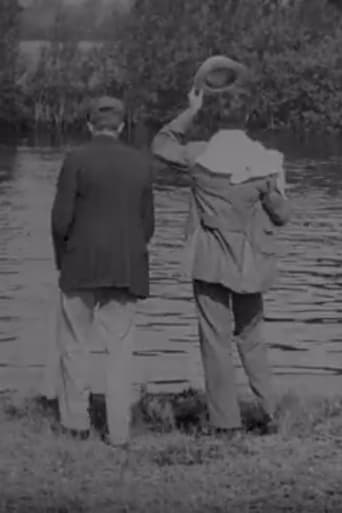
TRICK. Two bathers arrive at a river, disrobe at the water's edge and dive in. The action is then reversed and the men are seen leaving the water feet first and their clothes fly back on their bodies.
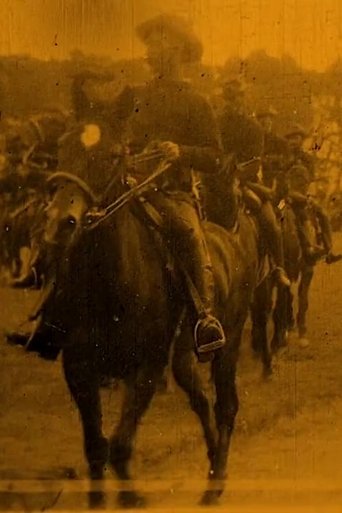
New Zealand's oldest surviving film shows a troop of horsemen from the Boer War Second Contingent in camp at one of the open days held before their departure at Newtown Park, Wellington, likely 13 January 1900. (https://ngataonga.org.nz/)
Trains steam past a station.
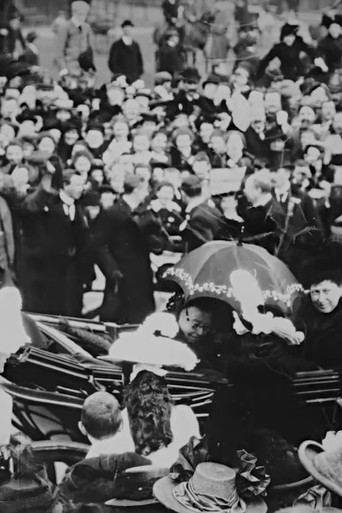
"This is the last ceremonious public appearance of Her Majesty, Queen Victoria. The picture was taken in Phoenix Park, Dublin, April 4th, 1900, and shows the Queen in an open carriage, being cheered by thousands of people, as she passes through an arch of welcome."

Silent record of a performance by Joseph Pujol. He was famous for his remarkable control of the abdominal muscles, which enabled him to seemingly fart at will.

Third of a series of films showing visitors to the Paris Exposition 1900 standing on a mobile wooden platform.
Ground level view of a column of Australian cavalry riding down Adderley Street in Cape Town watched by enthusiastic crowds.
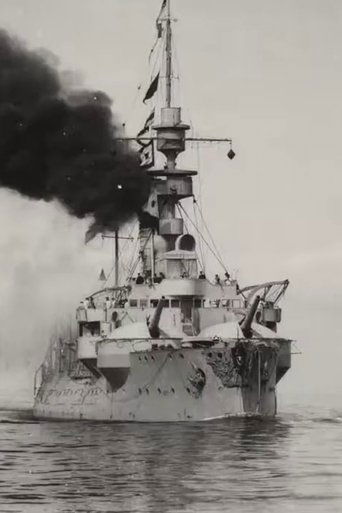
A German warship.

Directed by Robert W. Paul.
Directed by F.B. Thanawala.
This scene is laid on a tropical shore. A pickaninny is fishing, when a huge alligator creeps up upon him and swallows him. The old father, who has seen the disaster, rushes in with an axe and chops the alligator open, pulling the boy out none the worse for his experience.
School is over for the day. A stationary camera is trained on the door of the high school at the top of a few stairs. A man and small boy emerge, followed by wave after wave of boys, each in jacket and tie, most wearing caps. A few are arm in arm. At least 150 boys and young men appear. Then about 120 women and girls appear, parting to go in either direction down the sidewalk in front of the school. All are in long skirts and wear big hats; most wear blouses and jackets or coats. Some are adults; most seem older than the boys who've left just ahead of them. The last person to leave is a gentleman.
The approach to a cantilever bridge is shown. The camera is on the front of the car traveling over the rails. The car crosses the cantilever bridge, makes two turns and goes through a station.
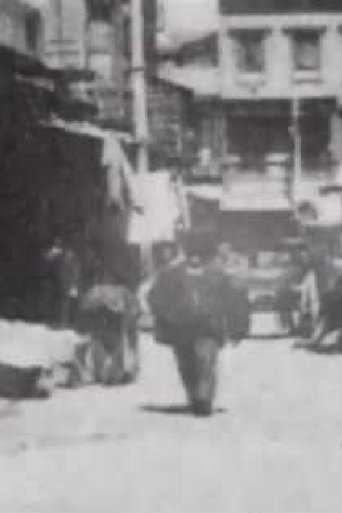
his film was shot in an alley of San Francisco's Chinatown on Saturday, September 15, 1900, at midday. The topography of the site (sloping down to the far street), the width of the alley, the location of utility poles.
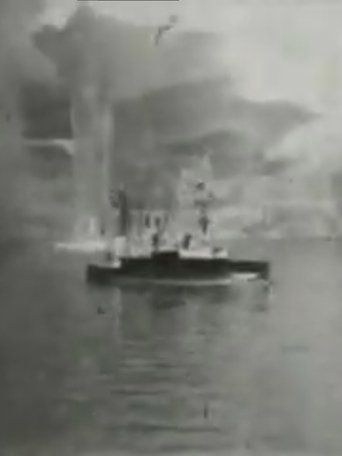
The scenes opens by showing the battleships maneuvering for a position. They finally draw up in line of battle and commence firing on the shore batteries. Immense volume of smoke arise from the fleet and from the distance shore. Shots are seen to fall thickly among the vessels and immense bodies of water are thrown up by the explosion of mines.
